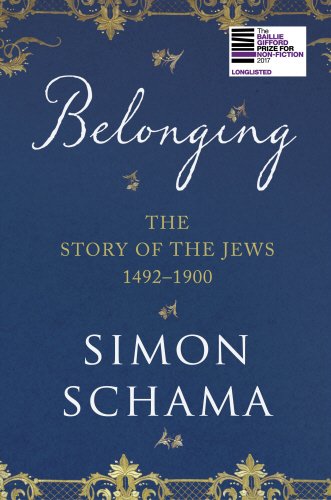
The Story of the Jews: Belonging (1492-1900)
Knihu The Story of the Jews: Belonging (1492-1900) aktuálne nie je možné zakúpiť v žiadnom z porovnávaných e-shopov...
Krátky popis
The words that failed were words of hope. But they did not fail at
all times and everywhere. These gripping pages teem with words of
defiance and optimism, sounds and images of tenacious life and
adventurous modernism, music and drama, business and philosophy,
poetry and politics. The second part of Simon Schama's epic Story
of the Jews is neither overwhelmed by hopelessness nor shrouded in
the smoke of the crematoria. As much as it gives full weight to the
magnitude of the disaster that befell the Jews, it is a story of
hope vindicated rather than wiped out. The stories unfold across
the world - in the provincial pavilions of Ming China and beneath
the brass chandeliers of Rembrandt's Amsterdam, on ships and carts,
stage-coaches and railway trains crossing oceans and continents, in
the honky-tonk of San Francisco and the pampas of Argentina, the
department stores of Berlin and the avenues of Trieste. The stories
themselves are played on the stage of opera houses, in the
travelling camera of an expedition in Ukraine, the prison cells of
Stalin's Russia, the lagers of the Holocaust, the scenery of misery
and redemption in Palestine and Israel. At the heart of the story
is the budding belief that peoples of different faiths, customs and
cultures can be fellow-citizens of a common country. And amidst all
the brutality, somehow the light of Jewish endurance is never
extinguished. The odyssey is unforgettable, the storyteller
impassioned, the words unfailing.
Výber kníh autorov
Simon Schama ,
The Bodley Head








Zobraziť všetky knihy autora
Simon Schama,
The Bodley Head
Výber kníh vydavateľa
Random House







Zobraziť všetky knihy vydavateľa
Random House
Naše tipy