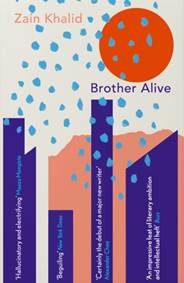
Brother Alive
Knihu kúpite v
1 e-shope
od
13,25 €
Ak sa vám po kliknutí na tlačidlo "Do obchodu" nezobrazí stránka knihy vo vybranom e-shope, je potrebné vypnúť AdBlock vo vašom prehliadači pre našu stránku.
Návod na vypnutie je napríklad na adrese https://www.sme.sk/dok/20466299/ako-vypnut-adblock-na-sme-sk-whitelist.
Krátky popis
*Winner of the NYPL Young Lions Award**Winner of the CLMP
Firecracker Award*Finalist for the NBCC John Leonard PrizeA New
York Times Writer to Watch This SummerNamed a Best Book of the Year
by Literary Hub and Library JournalIn 1990, three boys are born,
unrelated but intertwined by circumstance: Dayo, Iseul and Youssef.
They are adopted as infants and live in a shared bedroom perched
atop a mosque in Staten Island. The boys are a conspicuous trio:
Dayo is of Nigerian origin, Iseul is Korean and Youssef
indeterminately Middle Eastern, but they are so close as to be
almost inseparable.Nevertheless, Youssef is keeping a secret from
his brothers: he has an imaginary double, a familiar who seems
absolutely real, a shapeshifting creature he calls Brother. The
boys' adoptive father, Imam Salim, is known for his radical sermons
extolling the virtues of opting out of Western ideologies. But he
is uncharismatic at home, a distant father who spends evenings in
his study with whiskey-laced coffee, writing letters to his former
compatriots back in Saudi Arabia.Like Youssef, he too has secrets,
including the cause of his failing health, the reason for his
nighttime excursions from the house and the truth about what
happened to the boys' parents. When Imam Salim's path takes him
back to Saudi Arabia, the boys will be forced to follow. There they
will be captivated by an opulent, almost futuristic world and find
traces of their parents' stories.But they will have to change if
they want to survive in this new world, and the arrival of a
creature as powerful as Brother will not go unnoticed. With
stylistic brilliance and intellectual acuity, in Brother Alive Zain
Khalid brings characters to vivid life with a bold energy that
matches the great themes of his novel - family, capital, power,
sexuality and the possibility of reunion for those who are broken.
Výber kníh autorov
Grove Press / Atlantic Monthly Press ,
Zain (author) Khalid

Zobraziť všetky knihy autora
Grove Press / Atlantic Monthly Press,
Zain (author) Khalid
Výber kníh vydavateľa
Slovart
Zobraziť všetky knihy vydavateľa
Slovart
Naše tipy