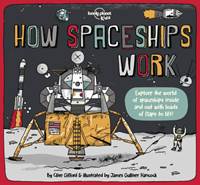
How Spaceships Work
Knihu kúpite v
1 e-shope
od
18,00 €
Ak sa vám po kliknutí na tlačidlo "Do obchodu" nezobrazí stránka knihy vo vybranom e-shope, je potrebné vypnúť AdBlock vo vašom prehliadači pre našu stránku.
Návod na vypnutie je napríklad na adrese https://www.sme.sk/dok/20466299/ako-vypnut-adblock-na-sme-sk-whitelist.
Krátky popis
Blast off into the cosmos with the latest title in the popular 'How
Things Work' series which includes How Cities Work, How Airports
Work, How Trains Work and How Ships Work - books that reveal the
inner workings of familiar places and vehicles. Featuring fantastic
illustrations by James Gulliver Hancock, this title explores the
ultimate vehicles: spaceships - how they do what they do, what
they're used for and their development through history. Spreads
will look at how rockets blast off into space, how people were sent
to the Moon and back, how space centres prepare spaceships and
astronauts for amazing adventures across the cosmos.It will also
look at all different types of spacecraft: space stations and
satellites orbiting Earth, rovers trundling over the surface of
Mars, and probes travelling at thousands of miles per second
through the outer reaches of the Solar System on incredible
journeys of discovery. Full-page gatefolds and flaps explore
spaceships both big and small, inside and out. It's going to be out
of this world!Contents:Leaving Earth: The history of
spaceflightSatellitesRocketsManned SpaceflightsSpace
ProbesLandersMoon MissionsRoversSpace CentresSpace TelescopesSpace
StationsSpaceships of the FutureAbout Lonely Planet Kids: Lonely
Planet Kids - an imprint of the world's leading travel authority
Lonely Planet - published its first book in 2011.Over the past 45
years, Lonely Planet has grown a dedicated global community of
travelers, many of whom are now sharing a passion for exploration
with their children. Lonely Planet Kids educates and encourages
young readers at home and in school to learn about the world with
engaging books on culture, sociology, geography, nature, history,
space and more. We want to inspire the next generation of global
citizens and help kids and their parents to approach life in a way
that makes every day an adventure.Come explore!
Výber kníh autorov
Lonely Planet ,
Lonely Planet Kids





Zobraziť všetky knihy autora
Lonely Planet,
Lonely Planet Kids
Výber kníh vydavateľa
Slovart

Zobraziť všetky knihy vydavateľa
Slovart
Naše tipy