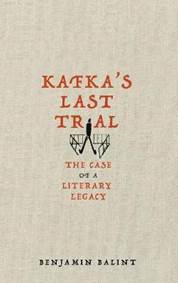
Kafkas Last Trial: The Strange Case of a Literary Legacy
Knihu kúpite v
1 e-shope
od
18,00 €
Ak sa vám po kliknutí na tlačidlo "Do obchodu" nezobrazí stránka knihy vo vybranom e-shope, je potrebné vypnúť AdBlock vo vašom prehliadači pre našu stránku.
Návod na vypnutie je napríklad na adrese https://www.sme.sk/dok/20466299/ako-vypnut-adblock-na-sme-sk-whitelist.
Krátky popis
When Franz Kafka died in 1924, his loyal champion Max Brod could
not bring himself to fulfil his friend's last instruction: to burn
his remaining manuscripts. Instead, Brod devoted the rest of his
life to editing, publishing and canonizing Kafka's work. By
betraying his friend's last wish, Brod twice rescued his legacy -
first from physical destruction, and then from obscurity. But that
betrayal was also eventually to lead to an international legal
battle: as a writer in German, should Kafka's papers come to rest
in Germany, where his three sisters died as victims of the
Holocaust? Or, as a Jewish writer, should his work be considered as
a cultural inheritance of Israel, a state that did not exist at the
time of his death?Alongside an acutely observed portrait of Kafka,
Benjamin Balint also traces the journey of the manuscripts Brod had
rescued when he fled from Prague to Palestine in 1939 and offers a
gripping account of the Israeli court case that determined their
fate. He tells of a wrenching escape from the Nazi invaders of
Czechoslovakia, of a love affair between exiles stranded in Tel
Aviv, and of two countries whose national obsessions with the past
eventually faced off in the courts. For fans of Philippe Sands'
East West Street, in Kafka's Last Trial Benjamin Balint invites us
to consider Kafka's remarkable legacy and to question whether that
legacy belongs by right to the country of his language, that of his
birth, or that of his cultural affinities - but also whether any
nation state can lay claim to ownership of a writer's work at all.
Výber kníh autorov
Picador ,
Benjamin Balint







Zobraziť všetky knihy autora
Picador,
Benjamin Balint
Výber kníh vydavateľa
Slovart

Zobraziť všetky knihy vydavateľa
Slovart
Naše tipy