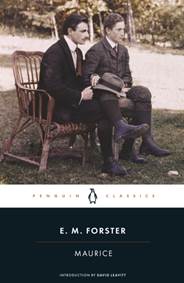
Maurice
Knihu kúpite v
1 e-shope
od
13,25 €
Ak sa vám po kliknutí na tlačidlo "Do obchodu" nezobrazí stránka knihy vo vybranom e-shope, je potrebné vypnúť AdBlock vo vašom prehliadači pre našu stránku.
Návod na vypnutie je napríklad na adrese https://www.sme.sk/dok/20466299/ako-vypnut-adblock-na-sme-sk-whitelist.
Krátky popis
An astonishingly frank and deeply autobiographical account of
homosexual relationships in an era when love between men was not
only stigmatised, but also illegal, E.M. Forster's Maurice is
edited by P.N. Furbank with an introduction by David Leavitt in
Penguin Classics.Maurice Hall is a young man who grows up confident
in his privileged status and well aware of his role in society.
Modest and generally conformist, he nevertheless finds himself
increasingly attracted to his own sex. Through Clive, whom he
encounters at Cambridge, and through Alec, the gamekeeper on
Clive's country estate, Maurice gradually experiences a profound
emotional and sexual awakening.A tale of passion, bravery and
defiance, this intensely personal novel was completed in 1914 but
remained unpublished until after Forster's death in 1970.
Compellingly honest and beautifully written, it offers a powerful
condemnation of the repressive attitudes of British society, and is
at once a moving love story and an intimate tale of one man's
erotic and political self-discovery. In his introduction, David
Leavitt explores the significance of the novel in relation to
Forster's own life and as a founding work of modern gay
literature.This edition reproduces the Abinger text of the novel,
and includes new notes, a chronology and further reading. E.
M.Forster (1879-1970) was a noted English author and critic and a
member of the Bloomsbury group. His first novel, Where Angels Fear
To Tread appeared in 1905. The Longest Journey appeared in 1907,
followed by A Room With A View (1908), based partly on the material
from extended holidays in Italy with his mother.Howards End (1910)
was a story that centred on an English country house and dealt with
the clash between two families, one interested in art and
literature, the other only in business. Maurice was revised several
times during his life, and finally published posthumously in 1971.
If you enjoyed Maurice, you might like Forster's A Room With a
View, also available in Penguin Classics.
Výber kníh autorov
Penguin Books Ltd ,
E. M. Forster





Zobraziť všetky knihy autora
Penguin Books Ltd,
E. M. Forster
Výber kníh vydavateľa
Jitro




Zobraziť všetky knihy vydavateľa
Jitro
Naše tipy