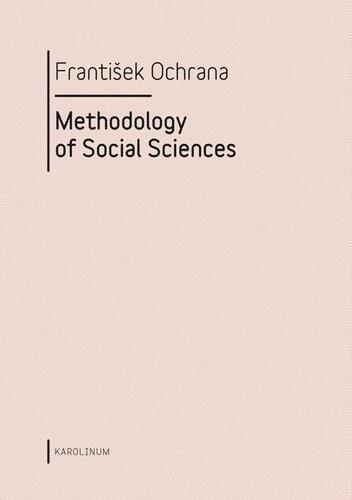
Methodology of Social Sciences - František Ochrana
Knihu kúpite v
1 e-shope
od
5,00 €
Ak sa vám po kliknutí na tlačidlo "Do obchodu" nezobrazí stránka knihy vo vybranom e-shope, je potrebné vypnúť AdBlock vo vašom prehliadači pre našu stránku.
Návod na vypnutie je napríklad na adrese https://www.sme.sk/dok/20466299/ako-vypnut-adblock-na-sme-sk-whitelist.
Krátky popis
The methodology of science is of a crucial importance for the
building of science as a whole as well as for the forming of the
different scientific branches. That is, it seeks (among other
things) to find out what is the nature of the “scientific image of
the world,” what is the substance of the “scientific law,” what
methods and procedures could and should be used within scientific
research. In the field of social sciences, these issues are also
associated with the question of the nature of clarifying statements
that social sciences provide. Are the statements of social sciences
similar to the explanations from natural sciences, or is it rather
a revelation of the meaning and understanding of social phenomena
based on a clarification of the system of rules? Is social
cognition by its nature a causal explanation and is it rather an
interpretation? All these are questions of the methodological
nature that show the way towards the answer with respect to the
character of the resulting scientific statement based on the
examined issues, and based on what the given scientific statement
provides evidence. This publication attempts to look for the
answers to these questions and to establish possible grounds for
their solutions.
Výber kníh autora
Ochrana František






Zobraziť všetky knihy autora
Ochrana František
Výber kníh vydavateľa
Karolinum








Zobraziť všetky knihy vydavateľa
Karolinum
Naše tipy