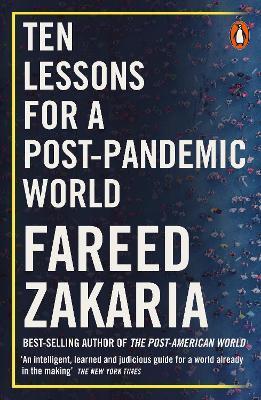
Ten Lessons for a Post-Pandemic World
Knihu kúpite v
2 e-shopoch
od
12,30 €
Ak sa vám po kliknutí na tlačidlo "Do obchodu" nezobrazí stránka knihy vo vybranom e-shope, je potrebné vypnúť AdBlock vo vašom prehliadači pre našu stránku.
Návod na vypnutie je napríklad na adrese https://www.sme.sk/dok/20466299/ako-vypnut-adblock-na-sme-sk-whitelist.

Krátky popis
Since the end of the Cold War, the world has been shaken to its
core three times. 11 September 2001, the financial collapse of 2008
and - most of all - Covid-19. Each was an asymmetric threat, set in
motion by something seemingly small, and different from anything
the world had experienced before.Lenin is supposed to have said,
'There are decades when nothing happens and weeks when decades
happen.' This is one of those times when history has sped up. In
this urgent and timely book, Fareed Zakaria, one of the 'top ten
global thinkers of the last decade' (Foreign Policy), foresees the
nature of a post-pandemic world: the political, social,
technological and economic consequences that may take years to
unfold. In ten surprising, hopeful 'lessons', he writes about the
acceleration of natural and biological risks, the obsolescence of
the old political categories of right and left, the rise of
'digital life', the future of globalization and an emerging world
order split between the United States and China.He invites us to
think about how we are truly social animals with community embedded
in our nature, and, above all, the degree to which nothing is
written - the future is truly in our own hands. Ten Lessons for a
Post-Pandemic World speaks to past, present and future, and will
become an enduring reflection on life in the early twenty-first
century.
Výber kníh autorov
Fareed Zakaria ,
Penguin Books Ltd






Zobraziť všetky knihy autora
Fareed Zakaria,
Penguin Books Ltd
Výber kníh vydavateľa
Slovart


Zobraziť všetky knihy vydavateľa
Slovart
Naše tipy