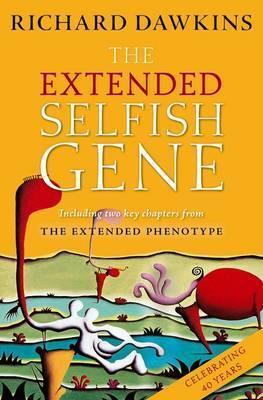
The Extended Selfish Gene
Knihu kúpite v
2 e-shopoch
od
26,55 €
Ak sa vám po kliknutí na tlačidlo "Do obchodu" nezobrazí stránka knihy vo vybranom e-shope, je potrebné vypnúť AdBlock vo vašom prehliadači pre našu stránku.
Návod na vypnutie je napríklad na adrese https://www.sme.sk/dok/20466299/ako-vypnut-adblock-na-sme-sk-whitelist.
Krátky popis
The Selfish Gene is a classic exposition of evolutionary thought.
In it Professor Dawkins articulates a gene's eye view of evolution
- a view giving centre stage to these persistent units of
information, and in which organisms can be seen as vehicles for the
replication of genes. The book provoked widespread and heated
debate, which in part led Dawkins to write The Extended Phenotype,
in which he gave a deeper clarification of the central concept
ofthe gene as the unit of selection, as well as contributing his
own development of this insight.For the first time, The Extended
Selfish Gene brings these two books together, by including two key
chapters from The Extended Phenotype. These chapters provide
Dawkins's detailed and powerful response to two issues raised by
critics of The Selfish Gene: the accusations of genetic determinism
(the idea that our behaviour is entirely determined by our genes),
and of ",adaptationism ", (that all traits are indiscriminately
perceived to be adaptations resulting fromnatural selection). While
written in particular for the biology community, Dawkins's clarity
of expression allows these chapters to be accessible to all who are
seriously engaged with the gene's eye view and its implications.The
imaginative, powerful, and stylistically brilliant Selfish Gene not
only brought the insights of Neo-Darwinism to a wide audience, but
galvanized the biology community, generating much debate and
stimulating whole new areas of research. Forty years later, its
insights remain as significant as on the day it was published.
Along with the two extra chapters, The Extended Selfish Gene
includes a new epilogue to The Selfish Gene from the author which
highlights therelevance of the gene's eye view to evolutionary
biology today.
Výber kníh autorov
Oxford University Press ,
Richard (Emeritus Fellow of New College ,
Oxford.) Dawkins



Zobraziť všetky knihy autora
Oxford University Press,
Richard (Emeritus Fellow of New College,
Oxford.) Dawkins
Výber kníh vydavateľa
Slovart


Zobraziť všetky knihy vydavateľa
Slovart
Naše tipy