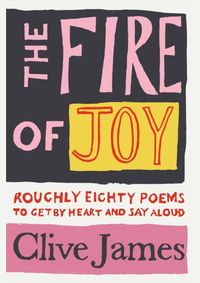
The Fire of Joy
Knihu kúpite v
1 e-shope
od
17,05 €
Ak sa vám po kliknutí na tlačidlo "Do obchodu" nezobrazí stránka knihy vo vybranom e-shope, je potrebné vypnúť AdBlock vo vašom prehliadači pre našu stránku.
Návod na vypnutie je napríklad na adrese https://www.sme.sk/dok/20466299/ako-vypnut-adblock-na-sme-sk-whitelist.
Krátky popis
Clive James read, learned and recited poetry aloud for most of his
life. In the last book he completed before he died, he offers a
selection of his favourite poems and a personal commentary on each.
In the last months of his life, his vision impaired by surgery and
unable to read, Clive James explored the treasure-house of his
mind: the poems he knew best, so good that he didn't just remember
them, he found them impossible to forget.The Fire of Joy is the
record of this final journey of recollection and celebration.
Enthralled by poetry all his life, James knew hundreds of poems by
heart. In offering this selection of his favourites, a succession
of poems from the sixteenth century to the present, his aim is to
inspire you to discover and to learn, and perhaps even to speak
poetry aloud.In his highly personal anthology, James offers a
commentary on each of the eighty or so poems: sometimes a
historical or critical note on the poem or its author, sometimes a
technical point about the poem's construction from someone who was
himself a poet, sometimes a personal anecdote about the role the
poem played in his own life. Whether you're familiar with a poem or
not - whether you're familiar with poetry in general or not - these
chatty, unpretentious, often tender mini-essays convey the joy of
James's enthusiasm and the benefit of his knowledge. His urgent
wish was to share with a new generation what he himself had
loved.This is a book to be read cover to cover or dipped into:
either way it generously opens up a world for our delight. 'Clive
James's joyous farewell . .. from Thomas Wyatt to Carol Ann Duffy'
- Guardian, Best Poetry of 2020
Výber kníh autorov
Pan Macmillan ,
Clive James


Zobraziť všetky knihy autora
Pan Macmillan,
Clive James
Výber kníh vydavateľa
Slovart
Zobraziť všetky knihy vydavateľa
Slovart
Naše tipy