
The Hungarian Other - András Gerő
Knihu kúpite v
1 e-shope
od
6,20 €
Ak sa vám po kliknutí na tlačidlo "Do obchodu" nezobrazí stránka knihy vo vybranom e-shope, je potrebné vypnúť AdBlock vo vašom prehliadači pre našu stránku.
Návod na vypnutie je napríklad na adrese https://www.sme.sk/dok/20466299/ako-vypnut-adblock-na-sme-sk-whitelist.
Krátky popis
The primary aim of the present book is to come to terms with the
relationship of Jewish Hungarians and the modern history of
Hungary. Typical interpretations are briefly reviewed and,
obviously, attempts are made to put forward an own interpretation.
Needless to say, the issues discussed in a Hungarian context can
also be seen from a much more general perspective. In other words,
the question that the present volume aims to answer is: Could the
explanatory power of national history be strong enough if defined
in a homogenized narrative? Can the stories of people who consider
themselves to belong to one nation but who have a very different
historical background be linked in any way? From a modern
viewpoint, the term Jewish is a rather delicate one in itself. It
is largely influenced by the various manifestations of the joint
power of anti-Semitism and the self-image of the one-time
homogeneous Jewish community that has evolved as a result. This
joint power is so strong that it highlights descent even where it
would otherwise be less significant. Nevertheless, it is the very
fate of Jewish Hungarians that shows us how entirely different
experiences can accumulate within a national community that is
considered homogeneous. In fact, we could as well abandon the
homogenized concept of the Hungarian nation and see the Hungarian
past as an integrative national history. The “other” is also
Hungarian: the Hungarian other. This Hungarianness might be
slightly different, yet this difference does not make it less
Hungarian. This has always been so and will most probably remain so
in the future.
Vývoj ceny
Aktuálna Ø cena knihy The Hungarian Other - András Gerő je 6,20 €
Výber kníh autora
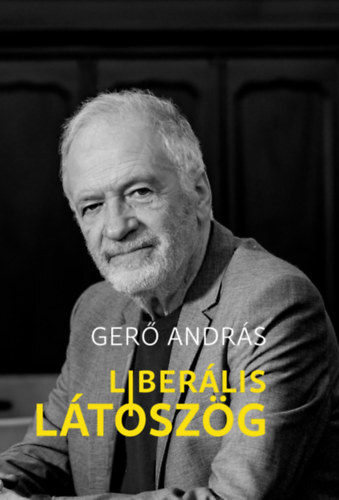
András Gerő







Zobraziť všetky knihy autora
András Gerő
Výber kníh vydavateľa
KKETTK Alapítvány








Zobraziť všetky knihy vydavateľa
KKETTK Alapítvány
Naše tipy