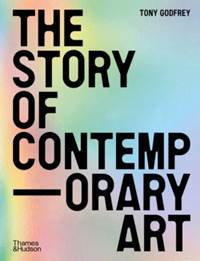
The Story of Contemporary Art
Knihu kúpite v
1 e-shope
od
37,00 €
Ak sa vám po kliknutí na tlačidlo "Do obchodu" nezobrazí stránka knihy vo vybranom e-shope, je potrebné vypnúť AdBlock vo vašom prehliadači pre našu stránku.
Návod na vypnutie je napríklad na adrese https://www.sme.sk/dok/20466299/ako-vypnut-adblock-na-sme-sk-whitelist.
Krátky popis
A lively introduction to and history of international contemporary
art from 1960 to the present. What does it mean? Is it really art?
Why does it cost so much? While these questions are perpetually
asked about contemporary art, they are not the questions that E.
H.Gombrich set out to answer in his seminal book The Story of Art.
Contemporary art is very different from what came before. From the
1960s, where Gombrich’s account concludes, artists began to abandon
traditional forms of art and started to make work that questioned
art’s very definition.This is where Godfrey picks up the story.
Developments in contemporary art have followed no straightforward
line of progress or sequence of movements. Recognizing this, Tony
Godfrey creates a narrative from a series of often dramatic
creative conflicts and arguments around what art is or should
be.From object versus sculpture and painting versus conceptual to
local versus global, gallery versus wider world, The Story of
Contemporary Art traces a history in terms of drastic changes in
social and political life over the last sixty years. How do we
experience being human in a world that seems to change so quickly?
In exploring art’s relationship to this question, Godfrey asserts
that multiple voices must be heard: critics, theorists, curators
and collectors, but also audiences and artists themselves. Key to
the book is the story of how a perception that art was made almost
exclusively by white men from North America and Western Europe has
been radically overturned.Compelling and intelligent, but never
academic, this book tells us how.
Výber kníh autorov
Thames & Hudson Ltd ,
Tony Godfrey






Zobraziť všetky knihy autora
Thames & Hudson Ltd,
Tony Godfrey
Výber kníh vydavateľa
Slovart

Zobraziť všetky knihy vydavateľa
Slovart
Naše tipy