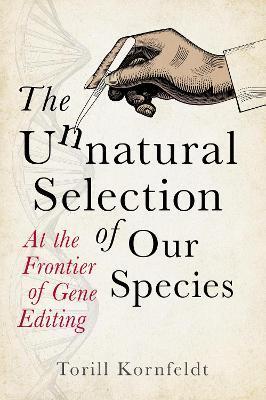
The Unnatural Selection of Our Species
Knihu kúpite v
2 e-shopoch
od
20,85 €
Ak sa vám po kliknutí na tlačidlo "Do obchodu" nezobrazí stránka knihy vo vybranom e-shope, je potrebné vypnúť AdBlock vo vašom prehliadači pre našu stránku.
Návod na vypnutie je napríklad na adrese https://www.sme.sk/dok/20466299/ako-vypnut-adblock-na-sme-sk-whitelist.
Krátky popis
How are we supposed to handle these new tools that could end up
changing our genetic material?The advancement of the new genetic
technology has hurtled forward at breakneck speed. When the first
genetically modified children, the twins Lulu and Nana, were born
in China in 2018, it became clear that humanity was facing
possibilities that we had, previously, only been able to imagine.
With the pair of genetic scissors known as CRISPR, we could
potentially choose the traits of our children and avoid ageing and
disease. But with that ability comes a new set of risks, forcing us
to face hard ethical and societal questions.Torill Kornfeldt has
travelled all over the world to meet the people who are driving the
research forward. She has visited fertility clinics in South Korea,
oncologists in China who are experimenting on sick patients, and
biohackers in the US who want to make the new technology available
to everyone. In The Unnatural Selection of Our Species, she
examines recent developments in gene editing and what might still
be waiting around the corner.'A book filled with curiosity, but
with a sober eye on the risks and dilemmas. Well written,
knowledgeable, and engaging - exactly how really good popular
science is supposed to be' Gustav Källstrand, Nobel CentrePraise
for The Re-Origin of Species: '[T]his excellent book, written with
a deceptively light touch... raises a number of deep questions and
paradoxes about our relationship with nature' The Guardian'Wondrous
tales of futuristic science experiments that happen to be true.'
Kirkus Reviews'[T]he projects Kornfeldt writes about are incredibly
compelling.' The New Yorker
Vývoj ceny
Aktuálna Ø cena knihy The Unnatural Selection of Our Species je 20,85 €
Výber kníh autorov
Legend Press Ltd ,
Torill Kornfeldt



Zobraziť všetky knihy autora
Legend Press Ltd,
Torill Kornfeldt
Výber kníh vydavateľa
Slovart
Zobraziť všetky knihy vydavateľa
Slovart
Naše tipy