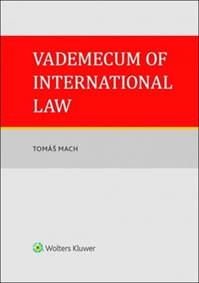
Vademecum of International Law
Knihu kúpite v
1 e-shope
od
21,38 €
Ak sa vám po kliknutí na tlačidlo "Do obchodu" nezobrazí stránka knihy vo vybranom e-shope, je potrebné vypnúť AdBlock vo vašom prehliadači pre našu stránku.
Návod na vypnutie je napríklad na adrese https://www.sme.sk/dok/20466299/ako-vypnut-adblock-na-sme-sk-whitelist.
Krátky popis
Vademecum of International law, as the label of this textbook
indicates, is a brief handbook of public international law. The
objective of this textbook is to provide its readers with a
coherent introduction into the study of public international law.
This textbook therefore explains the main concepts and institutions
of public international law. In doing so, where appropriate, the
text takes into consideration historic origins and development of
the respektive institutions of public international law, as well as
the historic development of public international law as a whole.
This textbook also deliberately includes extensive quotations of
both primary texts (such as court decisions or texts of
international treaties) as well as thoughts of influential writers
in the respective fields of public international law. The resort to
extensive quotations should provide the reader with first hand
resources without the (always subjective) deformation of the
respektive source via paraphrasing. This textbook is not intended
to serve as an all-encompassing textbook or encyclopedia. After
all, for that it would be too short in the first place. The
objective here is to provide the reader with a basic introduction
into the key areas of public international law, foundations upon
which one can built further study. The reason is that this book is
primarily intended as a main textbook for a one semester course
called Introduction to Public International Law taught at the
University of West Bohemia in Pilsen and frequented primarily by
Erasmus exchange students for whom English is in most cases a
foreign language. In doing so, this textbook leaves out certain
areas of public international law that ought to be read elsewhere,
inter alia: material maritime law, international criminal law,
space law, aviation law, international environmental law, and human
rights law. Other areas are discussed in volume and depth
appropriate to a one semester course in a qualifying law degree
program.
Vývoj ceny
Aktuálna Ø cena knihy Vademecum of International Law je 21,38 €
Výber kníh autora
Tomáš Mach
Zobraziť všetky knihy autora
Tomáš Mach
Výber kníh vydavateľa
Wolters Kluwer

Zobraziť všetky knihy vydavateľa
Wolters Kluwer
Naše tipy