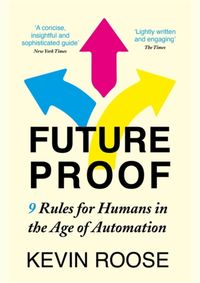
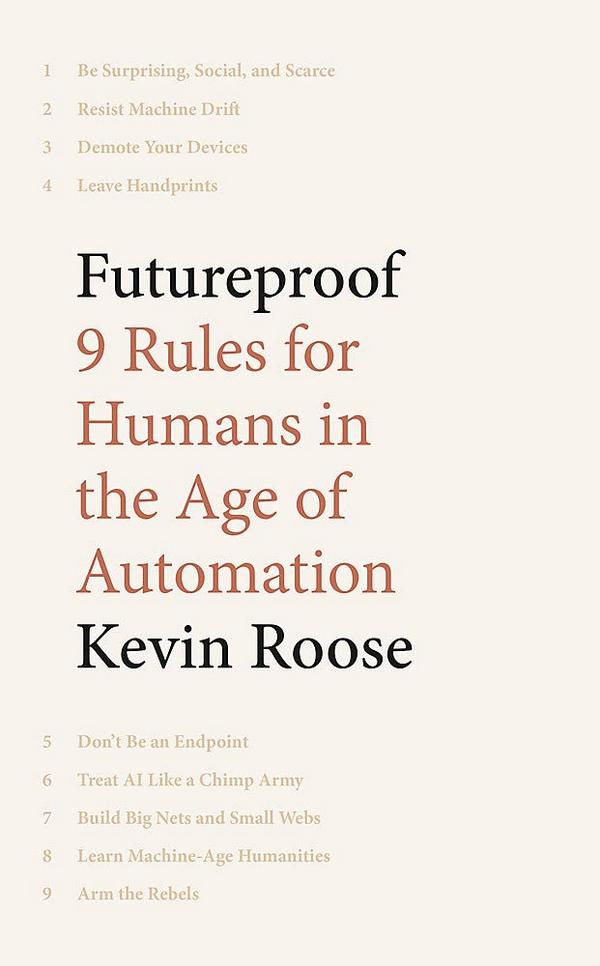
Futureproof
Knihu kúpite v
2 e-shopoch
od
12,30 €
Ak sa vám po kliknutí na tlačidlo "Do obchodu" nezobrazí stránka knihy vo vybranom e-shope, je potrebné vypnúť AdBlock vo vašom prehliadači pre našu stránku.
Návod na vypnutie je napríklad na adrese https://www.sme.sk/dok/20466299/ako-vypnut-adblock-na-sme-sk-whitelist.
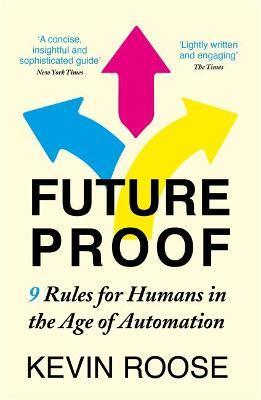
Krátky popis
A New York Times bestselling author and tech columnist's
counter-intuitive guide to staying relevant - and employable - in
the machine age by becoming irreplaceably human. It's not a future
scenario any more. We've been taught that to compete with
automation and AI, we'll have to become more like the machines
themselves, building up technical skills like coding.But, there's
simply no way to keep up. What if all the advice is wrong? And what
do we need to do instead to become futureproof?We tend to think of
automation as a blue-collar phenomenon that will affect truck
drivers, factory workers, and other people with repetitive manual
jobs. But it's much, much broader than that.Lawyers are being
automated out of existence. Last year, JPMorgan Chase built a piece
of software called COIN, which uses machine learning to review
complicated contracts and documents. It used to take the firm's
lawyers more than 300,000 hours every year to review all of those
documents.Now, it takes a few seconds, and requires just one human
to run the program. Doctors are being automated out of existence,
too. Last summer, a Chinese tech company built a deep learning
algorithm that diagnosed brain cancer and other diseases faster and
more accurately than a team of 15 top Chinese doctors.Kevin Roose
has spent the past few years studying the question of how people,
communities, and organisations adapt to periods of change, from the
Industrial Revolution to the present. And the insight that is
sweeping through Silicon Valley as we speak -- that in an age
dominated by machines, it's human skills that really matter - is
one of the more profound and counter-intuitive ideas he's
discovered. It's the antidote to the doom-and-gloom worries many
people feel when they think about AI and automation.And it's
something everyone needs to hear. In nine accessible, prescriptive
chapters, Roose distills what he has learned about how we will
survive the future, that the way to become futureproof is to become
incredibly, irreplaceably human.
Vývoj ceny
Aktuálna Ø cena knihy Futureproof je 13,25 €
Výber kníh autorov
John Murray ,
Roose Kevin



Zobraziť všetky knihy autora
John Murray,
Roose Kevin
Výber kníh vydavateľa
John Murray Publisher
Zobraziť všetky knihy vydavateľa
John Murray Publisher
Naše tipy