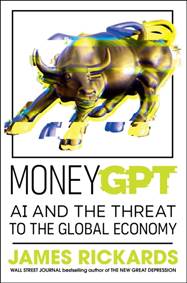
MoneyGPT
Knihu kúpite v
1 e-shope
od
23,70 €
Ak sa vám po kliknutí na tlačidlo "Do obchodu" nezobrazí stránka knihy vo vybranom e-shope, je potrebné vypnúť AdBlock vo vašom prehliadači pre našu stránku.
Návod na vypnutie je napríklad na adrese https://www.sme.sk/dok/20466299/ako-vypnut-adblock-na-sme-sk-whitelist.
Krátky popis
In November 2022, OpenAI released GPT-4 in a chatbot form to the
public. In just two months, it claimed 100 million users, the
fastest app to ever reach this benchmark. Since then, AI has become
an all-consuming topic - but as AI becomes more ubiquitous and
grows at an ever-increasing pace, what does it mean for the
financial markets, and how should investors prepare?In MoneyGPT,
James Rickards shares his signature predictions of the danger AI
poses to the global financial order, and the insidious ways in
which AI will threaten national security.Rickards shows how, while
AI is touted to increase efficiency and lower costs, its global
implementation in the financial world will actually cause chaos, as
selling begets selling and bank runs happen at lightning speed. AI
further benefits malicious actors, Rickards argues, because without
human empathy or instinct to intervene, threats like total nuclear
war that once felt extreme are now within reach. And throughout all
this, we must remain vigilant on the question of whose values will
be promoted in the age of AI.As Rickards predicts, these systems
will fail just when they are needed the most. MoneyGPT shows that
the danger is not that AI will malfunction, but that it will
function exactly as intended. The peril is not in the algorithms,
but in ourselves.And it’s up to us to intervene with old-fashioned
human logic before it’s too late. Rickards’ take is essential
reading for anyone looking to navigate this tumultuous new AI
climate.
Výber kníh autorov
James Rickards ,
Penguin Business




Zobraziť všetky knihy autora
James Rickards,
Penguin Business
Výber kníh vydavateľa
Slovart
Zobraziť všetky knihy vydavateľa
Slovart
Naše tipy