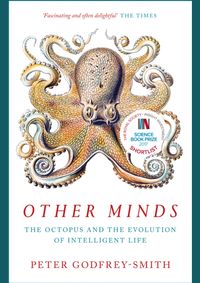
Other Minds : The Octopus and the Evolution of Intelligent Life
Knihu kúpite v
1 e-shope
od
14,20 €
Ak sa vám po kliknutí na tlačidlo "Do obchodu" nezobrazí stránka knihy vo vybranom e-shope, je potrebné vypnúť AdBlock vo vašom prehliadači pre našu stránku.
Návod na vypnutie je napríklad na adrese https://www.sme.sk/dok/20466299/ako-vypnut-adblock-na-sme-sk-whitelist.
Krátky popis
`Brilliant' Guardian Waterstones Non-Fiction Book of the Month
(March) SHORTLISTED FOR THE 2017 ROYAL SOCIETY SCIENCE BOOK PRIZE
What if intelligent life on Earth evolved not once, but twice? The
octopus is the closest we will come to meeting an intelligent
alien. What can we learn from the encounter? In Other Minds, Peter
Godfrey-Smith, a distinguished philosopher of science and a skilled
scuba diver, tells a bold new story of how nature became aware of
itself - a story that largely occurs in the ocean, where animals
first appeared. Tracking the mind's fitful development from unruly
clumps of seaborne cells to the first evolved nervous systems in
ancient relatives of jellyfish, he explores the incredible
evolutionary journey of the cephalopods, which began as
inconspicuous molluscs who would later abandon their shells to rise
above the ocean floor, searching for prey and acquiring the greater
intelligence needed to do so - a journey completely independent
from the route that mammals and birds would later take. But what
kind of intelligence do cephalopods possess? How did the octopus, a
solitary creature with little social life, become so smart? What is
it like to have eight tentacles that are so packed with neurons
that they virtually `think for themselves'? By tracing the question
of inner life back to its roots and comparing human beings with our
most remarkable animal relatives, Godfrey-Smith casts crucial new
light on the octopus mind - and on our own.
Vývoj ceny
Aktuálna Ø cena knihy Other Minds : The Octopus and the Evolution of Intelligent Life je 14,20 €
Výber kníh autorov
William Collins ,
Godfrey-Smith Peter






Zobraziť všetky knihy autora
William Collins,
Godfrey-Smith Peter
Výber kníh vydavateľa
Slovart
Zobraziť všetky knihy vydavateľa
Slovart
Naše tipy