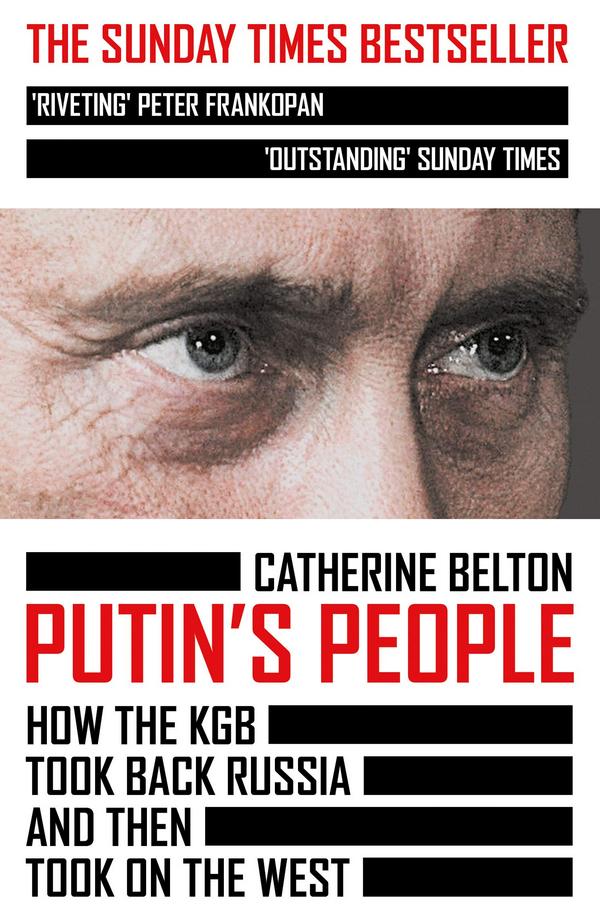
Putin´s People: How the KGB Took Back Russia and Then Took on the West
Knihu Putin´s People: How the KGB Took Back Russia and Then Took on the West aktuálne nie je možné zakúpiť v žiadnom z porovnávaných e-shopov...
Krátky popis
THE SUNDAY TIMES BESTSELLER A Times and Sunday Times Book of the
Year 2020 A Daily Telegraph Book of the Year 2020 'The Putin book
that we've been waiting for' Oliver Bullough, author of Moneyland
'Books about modern Russia abound ... Belton has surpassed them
all. Her much-awaited book is the best and most important on modern
Russia' The Times A chilling and revelatory expose of the KGB's
renaissance, Putin's rise to power, and how Russian black cash is
subverting the world.In Putin's People, former Moscow correspondent
and investigative journalist Catherine Belton reveals the untold
story of how Vladimir Putin and his entourage of KGB men seized
power in Russia and built a new league of oligarchs. Through
exclusive interviews with key inside players, Belton tells how
Putin's people conducted their relentless seizure of private
companies, took over the economy, siphoned billions, blurred the
lines between organised crime and political powers, shut down
opponents, and then used their riches and power to extend influence
in the West. In a story that ranges from Moscow to London,
Switzerland and Trump's America, Putin's People is a gripping and
terrifying account of how hopes for the new Russia went astray,
with stark consequences for its inhabitants and, increasingly, the
world.'A fearless, fascinating account ... Reads at times like a
John le Carre novel ... A groundbreaking and meticulously
researched anatomy of the Putin regime, Belton's book shines a
light on the pernicious threats Russian money and influence now
pose to the west' Guardian
Výber kníh autorov
William Collins ,
Catherine Belton




Zobraziť všetky knihy autora
William Collins,
Catherine Belton
Výber kníh vydavateľa
Slovart

Zobraziť všetky knihy vydavateľa
Slovart
Naše tipy