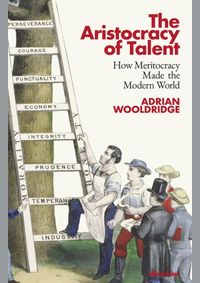
The Aristocracy of Talent
Knihu kúpite v
1 e-shope
od
29,93 €
Ak sa vám po kliknutí na tlačidlo "Do obchodu" nezobrazí stránka knihy vo vybranom e-shope, je potrebné vypnúť AdBlock vo vašom prehliadači pre našu stránku.
Návod na vypnutie je napríklad na adrese https://www.sme.sk/dok/20466299/ako-vypnut-adblock-na-sme-sk-whitelist.
Krátky popis
'This unique and fascinating history explains why the blame now
being piled upon meritocracy for many social ills is misplaced-and
that assigning responsibilities to the people best able to
discharge them really is better than the time-honoured customs of
corruption, patronage, nepotism and hereditary castes. Wooldridge
upends many common assumptions and provides an indispensable back
story to this fraught and pressing issue.' Steven Pinker'The
Aristocracy of Talent provides an important and needed corrective
to contemporary critiques of meritocracy. It puts meritocracy in an
illuminating historical and cross-cultural perspective that shows
how crucial the judgment of people by their talents rather than
their bloodlines or connections has been to creating the modern
world.Highly recommended' Francis FukuyamaMeritocracy: the idea
that people should be advanced according to their talents rather
than their status at birth. For much of history this was a
revolutionary thought, but by the end of the twentieth century it
had become the world's ruling ideology. How did this happen, and
why is meritocracy now under attack from both right and left?
Adrian Wooldridge traces the history of meritocracy forged by the
politicians and officials who introduced the revolutionary
principle of open competition, the psychologists who devised
methods for measuring natural mental abilities and the
educationalists who built ladders of educational opportunity.He
looks outside western cultures and shows what transformative
effects it has had everywhere it has been adopted, especially once
women were brought into the meritocractic system. Wooldridge also
shows how meritocracy has now become corrupted and argues that the
recent stalling of social mobility is the result of failure to
complete the meritocratic revolution. Rather than abandoning
meritocracy, he says, we should call for its renewal.
Výber kníh autorov
Allen Lane ,
Adrian Wooldridge







Zobraziť všetky knihy autora
Allen Lane,
Adrian Wooldridge
Výber kníh vydavateľa
Slovart


Zobraziť všetky knihy vydavateľa
Slovart
Naše tipy