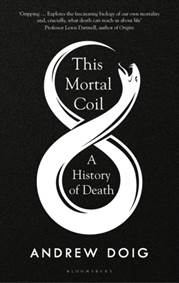
This Mortal Coil
Knihu kúpite v
1 e-shope
od
13,78 €
Ak sa vám po kliknutí na tlačidlo "Do obchodu" nezobrazí stránka knihy vo vybranom e-shope, je potrebné vypnúť AdBlock vo vašom prehliadači pre našu stránku.
Návod na vypnutie je napríklad na adrese https://www.sme.sk/dok/20466299/ako-vypnut-adblock-na-sme-sk-whitelist.
Krátky popis
A GUARDIAN BOOK OF THE YEAR'A superb book' Simon Sebag
Montefiore'An empowering story of human ingenuity' Economist'Full
of curious facts' The TimesCauses of death have changed irrevocably
across time. In the course of a few centuries we have gone from a
world where disease or violence were likely to strike anyone at any
age, and where famine could be just one bad harvest away, to one
where in many countries excess food is more of a problem than a
lack of it. Why have the reasons we die changed so much? How is it
that a century ago people died mainly from infectious disease,
while today the leading causes of death in industrialised nations
are heart disease and stroke? And what do changing causes of death
reveal about how previous generations have lived? University of
Manchester Professor Andrew Doig provides an eye-opening portrait
of death throughout history, looking at particular causes - from
infectious disease to genetic disease, violence to diet - who they
affected, and the people who made it possible to overcome
them.Along the way we hear about the long and torturous story of
the discovery of vitamin C and its role in preventing scurvy, the
Irish immigrant who opened the first washhouse for the poor of
Liverpool, and in so doing educated the public on the importance of
cleanliness in combating disease, and the Church of England curate
who, finding his new church equipped with a telephone, started the
Samaritans to assist those in emotional distress. This Mortal Coil
is a thrilling story of growing medical knowledge and social
organisation, of achievement and, looking to the future, of
promise.
Výber kníh autorov
Bloomsbury Publishing ,
Andrew Doig



Zobraziť všetky knihy autora
Bloomsbury Publishing,
Andrew Doig
Výber kníh vydavateľa
Slovart
Zobraziť všetky knihy vydavateľa
Slovart
Naše tipy